
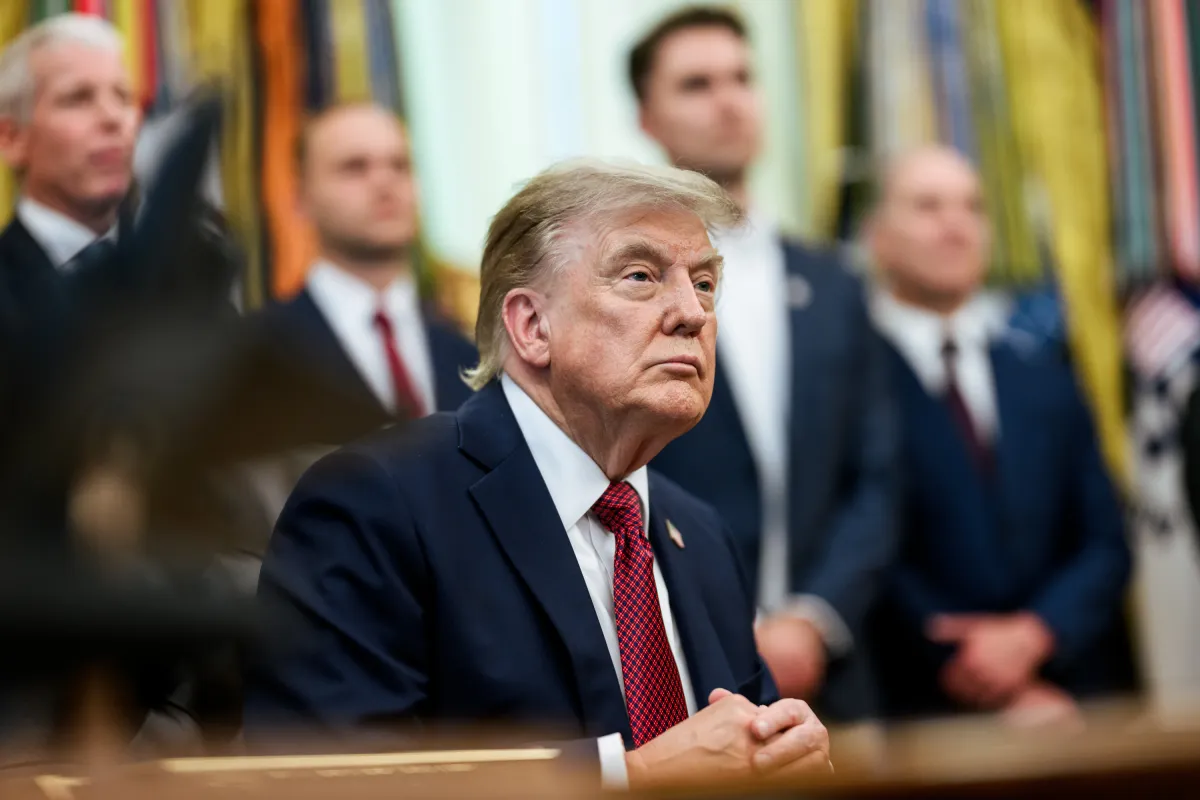
This is a question that can lead to a big conversation across the United States.
Since Donald Trump returned to the White House in January 2025, Americans have continued to discuss the direction of the country, the economy, immigration, national security, government spending, and the future of American families.

Some people believe the country is moving in a better direction. They may support the administration’s priorities, appreciate its approach to certain national issues, or believe that changes in government policy will produce positive results.
Others have a different perspective. They may be concerned about the cost of living, economic uncertainty, political disagreements, or the potential consequences of particular decisions.
There are also people who see a mixture of positive and negative developments. They may agree with some decisions while disagreeing with others, or they may feel that it is too early to reach a firm conclusion.

And some Americans simply are not sure whether the country is better off overall.
That is what makes this question worth discussing.
The United States is a large and diverse country. People have different jobs, incomes, family responsibilities, priorities, and experiences. A change that one person considers beneficial may affect another person differently.
For example, someone who owns a business may evaluate the country’s direction differently from someone who rents an apartment and is struggling with monthly expenses.
A family with young children may prioritize education, childcare, and household costs.
A retired person may focus more on healthcare expenses, savings, and financial security.
A worker may be particularly interested in wages, job opportunities, and whether their paycheck covers the cost of everyday necessities.

These different experiences can shape how people answer the same question.
So, let’s look at the four possible answers and consider what each one might mean.
There is no single response that everyone must choose. This is an opinion poll, and the goal is to encourage people to share their perspectives and explain what matters most to them.
━━━━━━━━━━━━━━━━━━━━
🅰️ A — YES! 🇺🇸
If you selected A, you believe America is better off today than it was before Donald Trump returned to office.
There may be several reasons behind your opinion.
Perhaps you support the administration’s policy priorities and believe the country needs a different approach to certain national challenges.
Perhaps you are optimistic about the future and believe that recent decisions will create opportunities for American workers, families, and businesses.
Or perhaps you have seen developments that you consider positive and believe they indicate that the country is moving in the right direction.
For some Americans, the direction of the economy is an important part of this judgment.
People often evaluate economic conditions by considering employment opportunities, wages, business activity, inflation, taxes, and the cost of everyday necessities.
Someone who believes that economic conditions are improving may feel more confident about their family’s future.
A business owner who expects stronger demand for their products or services may feel optimistic about the months ahead.
A worker who finds a promising job opportunity may feel that their personal circumstances are improving.
However, personal experiences do not always tell the whole story about the national economy.
Economic conditions can differ considerably between industries, states, cities, and households.
Some people may experience improvements while others continue to face financial difficulties.
That is why it can be useful to consider both personal experiences and broader economic information when evaluating the country’s direction.
Another factor may be immigration and border policy.
Some Americans support stricter immigration enforcement and believe that stronger enforcement of existing laws is an important government responsibility.
Others may place greater emphasis on humanitarian considerations, legal immigration opportunities, or the economic contributions of immigrants.
People’s views on these issues can influence how they evaluate the administration’s performance.
National security may also play a role.
Some voters place a high priority on military readiness, border security, international relations, and the government’s response to potential threats.
They may judge the administration positively if they believe its approach reflects their priorities.
Other people may evaluate those same policies differently, considering their costs, consequences, and effects on international relationships.
There are also Americans who care deeply about government efficiency, public spending, regulations, energy policy, education, or the role of the federal government.
Each of these issues can influence a person’s overall assessment.
But an important question remains: How do we determine whether the country is genuinely better off?
One approach is to identify the issues that matter most and examine how conditions have changed over time.
For example, people can compare economic indicators from relevant periods, look at changes in household expenses, review employment information, and examine the effects of specific policies.
They can also distinguish between an announced goal and a result that has actually occurred.
A government may introduce a policy with the intention of improving an economic condition, but the eventual outcome can depend on many factors.
Similarly, a positive or negative development may reflect several influences rather than a single decision.
Evaluating the country’s direction therefore requires more than considering one headline or one political announcement.
It requires looking at evidence, understanding the broader circumstances, and recognizing that different policies may produce different results.
If you selected A, what makes you believe America is better off?
Is it the economy?
Immigration policy?
National security?
Government priorities?
Your own experience?
Or a combination of several factors?
What is the biggest reason behind your answer?
That is the question that could make this discussion especially interesting.
━━━━━━━━━━━━━━━━━━━━
🅱️ B — A LITTLE 🤔
If you selected B, you may believe that America has improved in some areas but still faces significant challenges.
This is a nuanced position because it recognizes that a country can experience positive developments without every problem being solved.
You might support certain government decisions while questioning others.
You might be encouraged by developments in one area but disappointed by conditions in another.
Or you might believe that the effects of recent policies are still unfolding and that more time is needed to evaluate their results.
Consider the economy.
A person may feel encouraged by a particular economic development but remain concerned about grocery prices, rent, insurance, healthcare, or other household expenses.
Another person may be satisfied with their employment situation but worried about the cost of buying a home.
A small-business owner might welcome a policy change while still facing challenges related to borrowing costs, customer demand, competition, or operating expenses.
These experiences illustrate why it can be difficult to summarize the economic condition of an entire country with a simple yes-or-no answer.
Economic indicators can also tell different stories.
Employment, inflation, wages, consumer spending, and economic growth measure different aspects of economic activity.
One indicator may improve while another remains a concern.
For example, slowing inflation means prices are increasing more slowly; it does not necessarily mean that prices have returned to earlier levels.
This distinction matters to households that continue to pay more for groceries, housing, or other necessities than they did several years ago.
A family may welcome slower price increases but still struggle to make its monthly budget work.
Someone who receives a wage increase may feel financially better off, but the benefit could be reduced if essential expenses rise by a similar amount.
Looking at these details can help explain why some Americans might believe the country has improved only a little.
The same principle applies to other national issues.
A person might support stronger border enforcement while also wanting clear information about how immigration policies are implemented and what their consequences are.
Someone might support reducing government spending but disagree with particular cuts.
Another person might welcome an effort to simplify regulations while wanting to understand how the changes affect workers, consumers, or small businesses.
Public policies rarely affect every person in exactly the same way.
Their outcomes can depend on individual circumstances, regional conditions, implementation, and other developments.
That is why a mixed assessment can be reasonable.
It is possible to recognize a positive development without concluding that the entire country is doing better.
It is also possible to recognize a serious problem without concluding that every policy or decision has failed.
A thoughtful evaluation considers both the improvements and the remaining challenges.
If you chose B, perhaps you believe the country is moving in a somewhat better direction but still has a long way to go.
Perhaps you are waiting to see whether recent decisions produce lasting benefits.
Or perhaps you believe that the results depend on which issue you examine.
What has improved in your opinion, and what still needs work?
Would you point to the economy, household expenses, immigration, healthcare, public services, or another issue?
Your answer may explain why you selected “A little” rather than a more definite yes or no.
━━━━━━━━━━━━━━━━━━━━
🅲 C — NO. 🇺🇸
If you selected C, you believe America is not better off today than it was before Donald Trump returned to office.
There may be several reasons for that judgment.
Perhaps you are concerned about the economy and the financial pressures facing American households.
Perhaps you disagree with important policy decisions.
Or perhaps you believe that developments since January 2025 have not produced the improvements you expected.
For many people, the cost of living is one of the most immediate ways to judge economic conditions.
Households have to manage expenses regardless of what politicians say about the economy.
People need to pay for housing, food, transportation, utilities, healthcare, and other necessities.
When those expenses place pressure on a household budget, national economic announcements may feel less important than the practical challenge of making ends meet.
A person may hear that an economic indicator has improved but still struggle to afford rent.
A family may have steady employment but find that childcare and grocery costs consume a large share of its income.
A worker may want to purchase a home but feel that prices and financing costs remain beyond their budget.
These experiences can shape how people evaluate the country’s direction.
Of course, individual financial difficulties do not automatically establish that the national economy is performing poorly overall.
Likewise, strong national economic indicators do not guarantee that every household is doing well.
Both perspectives matter when considering the bigger picture.
People who choose C may also have concerns about public policy.
Some may disagree with the administration’s approach to immigration.
Others may question its economic priorities, spending decisions, environmental policies, healthcare proposals, or international relationships.
Different people may reach the same answer for entirely different reasons.
That is why it is useful to ask which specific developments influence someone’s judgment.
A general statement that the country is worse off can be the beginning of a discussion, but it does not explain which conditions have changed or why the person believes those changes matter.
For example, someone concerned about household costs might point to expenses that have increased faster than their income.
Someone focused on public services might be concerned about how a particular decision affects their community.
Someone who prioritizes international relations might have a different set of concerns.
These arguments can be evaluated more clearly when they identify specific issues and relevant evidence.
It is also important to distinguish between a policy’s intended purpose and its actual effects.
A policy may be introduced to address a particular problem, but its outcomes need to be assessed using available information.
Some effects may appear quickly, while others may take longer to emerge.
There may also be unexpected consequences or trade-offs.
A careful evaluation considers the evidence rather than assuming that every decision automatically succeeds or fails.
If you selected C, what is the main reason for your opinion?
Are you most concerned about the economy?
The cost of living?
Immigration?
Healthcare?
Government decisions?
America’s position in the world?
Or something else?
You do not need to agree with every criticism made by other people who select C.
Your reasons may be different from theirs.
What specific change has most influenced your view of the country?
Explaining that reason can make your answer more informative and help others understand your perspective.
━━━━━━━━━━━━━━━━━━━━
🅳 D — I’M NOT SURE. 🤷
If you selected D, you may believe that the question is too complicated to answer confidently right now.
That is an understandable position.
Determining whether an entire country is better off involves many different issues, and not all of them move in the same direction at the same time.
A person might feel optimistic about employment but concerned about housing costs.
Someone else might support certain policies but remain uncertain about their long-term effects.
Another person might not follow politics closely enough to feel comfortable making a broad judgment.
There is nothing unusual about wanting more information before reaching a conclusion.
In fact, uncertainty can be a useful reminder that important questions deserve careful consideration.
When evaluating a president’s performance, it can help to begin by identifying the areas that matter most to you.
For example, you might consider the economy, employment, inflation, wages, immigration, national security, healthcare, education, energy, and government spending.
You do not necessarily need to give every issue equal importance.
Instead, think about which areas have the greatest effect on your life and which responsibilities you believe the federal government should prioritize.
You can then look for information about how conditions have changed over time.
It is important to use comparable time periods when making those comparisons.
For example, comparing a recent economic indicator with an appropriate earlier period can be more informative than comparing two numbers from unrelated periods.
It is also useful to recognize that some economic measures are adjusted for inflation while others are not.
A rise in total wages, for instance, does not necessarily mean that workers can afford more if the prices of goods and services have risen even faster.
Similarly, a change in a national statistic may not reflect what is happening in every state or household.
Looking at several relevant measures can provide a more complete picture.
Another consideration is timing.
A policy announcement does not immediately tell us whether the policy will achieve its goals.
Some changes may have short-term effects, while others may take years to evaluate.
In addition, presidents operate within a broader economic and political environment.
Congress, state governments, businesses, consumers, international events, and decisions made before a president takes office can all influence national conditions.
That does not mean presidents have no influence.
It means that determining exactly how much a particular administration contributed to an outcome can require careful analysis.
If you are unsure, you might begin by asking three simple questions.
First, which conditions have changed since the comparison period?
Second, which of those changes have affected my life or the lives of other Americans?
Third, what evidence helps explain the causes and consequences of those changes?
These questions can help turn a general impression into a more informed judgment.
You might eventually decide that the country is better off, worse off, or experiencing a mixture of improvements and setbacks.
Your opinion may also change as new information becomes available.
That is a normal part of evaluating a complex subject.
If you chose D, what information would help you decide?
Would you want to see economic data?
Learn more about specific policies?
Hear from people with different perspectives?
Or wait until there is more evidence about the effects of recent decisions?
Sometimes, saying “I’m not sure” is simply an honest acknowledgment that the question deserves a closer look.
━━━━━━━━━━━━━━━━━━━━
🇺🇸 WHAT DOES “BETTER OFF” REALLY MEAN?
One of the most important parts of this poll is the phrase “better off.”
It sounds straightforward, but different people can interpret it in very different ways.
For one person, being better off may mean having more money available after paying essential expenses.
For another, it may mean feeling safer in their community.
Someone else might focus on access to healthcare, educational opportunities, environmental conditions, or the country’s position in international affairs.
A business owner might evaluate the direction of the country by looking at customer demand, taxes, regulations, and opportunities to expand.
A worker might focus on wages, job security, working conditions, and opportunities for advancement.
A parent might prioritize the quality of local schools, the cost of childcare, and the future opportunities available to their children.
A retired person might be more concerned about the cost of healthcare, the value of savings, and the ability to maintain a comfortable standard of living.
These priorities can overlap, but they do not always lead to the same conclusions.
Imagine two households living in different parts of the country.
One household experiences a rise in income and finds that its financial situation has improved.
The other household faces higher housing expenses and finds it increasingly difficult to cover its monthly bills.
Both households are experiencing real conditions, but their conclusions about the economy may differ.
Now imagine that both households are also considering public safety, healthcare, and the quality of government services.
Their overall assessments may become even more complicated.
This is why broad questions about national well-being cannot always be answered by looking at a single statistic.
Economic indicators can provide useful information, but they do not capture every aspect of people’s lives.
Public opinion can reveal how people feel, but opinions alone do not establish the causes of a particular outcome.
A complete evaluation may require a combination of personal experiences, reliable data, policy analysis, and an understanding of how different issues interact.
It is also worth remembering that people may disagree about the appropriate balance between national priorities.
One person may favor a policy because they believe it will improve economic efficiency.
Another may be concerned about how the same policy affects vulnerable households.
Both might be considering genuine trade-offs, even though they reach different conclusions.
A useful discussion therefore begins by asking what people mean when they say the country is better off.
Does it mean a stronger economy, a lower cost of living, greater security, better public services, or a combination of these things?
The answer can make a substantial difference to how someone evaluates the country’s direction.
━━━━━━━━━━━━━━━━━━━━
💵 THE ECONOMY AND THE COST OF LIVING
Economic conditions are likely to be an important part of this discussion because they influence so many aspects of everyday life.
For most households, the economy is not just a collection of statistics.
It is the experience of earning money, paying bills, buying groceries, filling a vehicle with fuel, paying rent or a mortgage, and trying to save for the future.
When household expenses increase, people may feel financial pressure even if other economic indicators look positive.
That is why it is useful to distinguish between inflation and the price level.
Inflation measures how quickly prices are increasing over a period.
If inflation slows, prices may still be rising, just at a slower rate.
For a household that is already paying more than it used to for food, housing, or insurance, slower inflation does not necessarily mean that life has become affordable again.
Similarly, wage growth needs to be considered alongside changes in prices.
If a worker receives a pay increase but essential expenses rise by a comparable amount, the worker’s purchasing power may not improve very much.
If wages grow faster than prices, the worker may be able to afford more than before.
These distinctions can help explain why people sometimes have different reactions to the same economic news.
Someone may hear that employment is strong and feel optimistic.
Another person may be employed but struggling with housing costs and feel less confident.
Both experiences can exist within the same national economy.
Businesses also face their own challenges.
A company may benefit from stronger customer demand but face higher costs for supplies, labor, transportation, or financing.
A small business may welcome a change in regulations but still struggle to compete with larger companies.
The effect of a policy can depend on the industry, the region, the size of the business, and the conditions in which it operates.
When evaluating whether America is better off, it can be helpful to examine several economic measures rather than relying on a single headline.
These might include inflation, employment, wages, economic growth, housing affordability, consumer confidence, and household debt.
It is also useful to compare current information with appropriate earlier periods and to consider whether changes are temporary or persistent.
No single measure can fully describe the financial condition of every American household.
If the economy is your main concern, what matters most to you?
Is it the price of groceries?
Housing?
Employment opportunities?
Wages?
Taxes?
Or the ability to save money after paying your bills?
Your answer may help explain how you evaluate the country’s direction.
━━━━━━━━━━━━━━━━━━━━
🏠 EVERYDAY LIFE FOR AMERICAN FAMILIES
For many people, the question of whether the country is better off becomes personal when they think about their family’s everyday life.
Can they afford the home they want?
Can they cover healthcare expenses?
Can they save for retirement?
Can they pay for their children’s education?
Can they handle an unexpected bill without going into debt?
These questions can matter more to an individual household than a general statement about national progress.
Families often make decisions based on their own circumstances.
A household with a stable income and manageable expenses may feel confident about the future.
A household dealing with rising bills or uncertain employment may feel less secure.
Even families with similar incomes can experience different financial pressures depending on where they live.
Housing costs, transportation needs, childcare expenses, insurance premiums, and local taxes can vary considerably from one community to another.
For example, a household living in an expensive metropolitan area may face very different financial challenges from a household living in a smaller town.
The availability of jobs, schools, healthcare facilities, public transportation, and other services can also influence the quality of everyday life.
This means that national averages should be interpreted carefully.
An average can be useful for understanding a broad trend, but it does not describe every person’s circumstances.
It is also important to distinguish between short-term changes and long-term financial security.
A household might receive a temporary financial benefit but still be concerned about its ability to cover future expenses.
Another household might face a difficult period while making decisions that improve its financial stability over time.
These circumstances illustrate why judging the country’s direction can involve more than one moment in time.
People may also disagree about which responsibilities belong to the federal government, state governments, local authorities, businesses, or individuals.
Those views can influence how they evaluate public policies.
Someone may want the government to take a more active role in addressing a problem.
Someone else may believe that a different approach would be more effective.
A productive conversation can explore those differences by asking which outcomes people want and what evidence supports the approaches they prefer.
If you think America is better off, what improvement would you most want to see in everyday family life?
If you think America is worse off, which challenge concerns you most?
And if you are unsure, what information would help you decide?
These questions can bring the discussion back to the real experiences behind people’s opinions.
━━━━━━━━━━━━━━━━━━━━
📊 WHY FACTS AND TIME PERIODS MATTER
When people discuss whether a country has improved, they often compare the present with an earlier period.
That comparison can be useful, but it needs to be made carefully.
The first step is to identify the specific issue being evaluated.
If the subject is inflation, compare appropriate inflation measures.
If the subject is employment, look at relevant labor-market data.
If the subject is household purchasing power, consider both income and the cost of goods and services.
If the subject is public safety, examine relevant crime statistics while recognizing that reporting practices and local conditions can affect the interpretation.
Different questions require different evidence.
The second step is to choose a meaningful comparison period.
Comparing a single month with another month can sometimes produce a misleading impression if seasonal patterns or temporary events influence the data.
Looking at longer periods can help identify whether a change is part of a broader trend.
The third step is to distinguish correlation from causation.
Two things can happen around the same time without one necessarily causing the other.
For example, an economic indicator might improve during a president’s term, but other factors may also have contributed to the change.
Global economic conditions, decisions by businesses and consumers, actions by Congress, state policies, and earlier developments can all influence outcomes.
Presidential decisions can matter, but determining their specific effects requires more than observing that an event occurred after a president took office.
The fourth step is to consider the distribution of benefits and costs.
A policy might improve one measure while creating challenges for a particular group.
Another policy might involve short-term costs in pursuit of a longer-term objective.
Understanding these trade-offs can help people make a more balanced assessment.
Finally, it is important to distinguish facts from predictions.
A promise about what a policy will accomplish is not the same as evidence that the outcome has already occurred.
Similarly, a warning about a possible consequence is not proof that the consequence will happen.
Both promises and warnings can be worth examining, but they should be evaluated according to the evidence available.
These principles are useful regardless of political affiliation.
They can help people evaluate claims made by supporters, critics, government officials, news organizations, and commentators.
If the question is whether America is better off, the strongest answers are those that identify what has changed, explain why the change matters, and provide evidence for the conclusion.
You do not have to be an economist or policy expert to ask these questions.
You simply need to be willing to look beyond a slogan and consider the information behind it.
━━━━━━━━━━━━━━━━━━━━
🗳️ CAN PEOPLE WITH DIFFERENT POLITICAL VIEWS AGREE ON SOME ISSUES?
Although Americans may disagree strongly about Donald Trump and his administration, their priorities can sometimes overlap.
People with different political views may both want affordable housing, safe communities, good schools, reliable healthcare, and opportunities for their families.
They may both want the economy to provide meaningful employment and allow people to build secure futures.
They may both want public officials to explain their decisions and use government resources responsibly.
However, they may disagree about the best way to achieve these goals.
One person might support a particular government program.
Another might prefer a different policy or believe that a program should be changed.
Someone might favor lower taxes, while another may place greater emphasis on funding public services.
People can agree on a desired outcome while disagreeing about the methods needed to achieve it.
Recognizing this distinction can make political conversations more constructive.
Instead of assuming that everyone with a different opinion wants the country to fail, it can be more useful to ask what they hope to achieve and why they prefer a particular approach.
This does not mean that every disagreement can be resolved easily.
Some policy choices involve genuine conflicts between priorities, and people may reasonably disagree about the appropriate balance.
But understanding the reasoning behind a position can help make the disagreement clearer.
For example, two people might agree that housing affordability is important but disagree about whether a particular proposal would improve the situation.
They can examine the evidence, discuss possible consequences, and explain why they reach different conclusions.
That is more informative than simply labeling one side right and the other side wrong without explaining the reasoning.
The same principle applies to this poll.
Someone who answers A may prioritize certain policy goals.
Someone who answers C may prioritize different outcomes or evaluate the administration’s performance differently.
Someone who answers B may see a mixture of benefits and concerns.
Someone who answers D may believe that more information is necessary.
The answers do not tell us everything about a person’s beliefs or motivations.
They simply provide a starting point.
A good discussion gives people room to explain what matters to them and why.
━━━━━━━━━━━━━━━━━━━━
🔮 WHAT SHOULD AMERICANS LOOK FOR IN THE COMING YEARS?
Another way to approach the question is to think about what would convince you that the country is moving in a better direction.
Would you want to see sustained improvements in household purchasing power?
Would you focus on employment opportunities and wage growth?
Would you prioritize housing affordability?
Would you look at healthcare access, educational outcomes, infrastructure, public safety, or national security?
Different people will place different priorities at the top of their lists.
The key is to identify measurable outcomes rather than relying entirely on broad political statements.
For example, someone concerned about housing might look at changes in home prices, rents, financing costs, and the supply of available homes.
Someone concerned about employment might examine job growth, wages, labor-force participation, and the quality of available jobs.
Someone focused on healthcare might consider costs, access to services, insurance coverage, and health outcomes.
Someone concerned about public finances might examine government revenue, spending, deficits, and debt.
Each of these subjects requires different information.
It is also useful to consider how long an improvement has lasted.
A temporary change may be encouraging, but a sustained trend can provide stronger evidence of a lasting shift.
At the same time, some policies may require years before their full effects become clear.
That means patience and continued evaluation can be important.
It is possible to support a policy’s goals while remaining uncertain about whether it will succeed.
It is also possible to criticize a policy while recognizing that its long-term effects have not yet been fully established.
A thoughtful assessment remains open to new evidence.
If conditions improve, that information should be considered.
If problems become more serious, that information should also be considered.
The goal is not to defend an earlier opinion at all costs.
The goal is to reach the most informed conclusion possible using the evidence available.
So, imagine looking back several years from now.
What changes would make you feel confident that America had become better off?
Would it be stronger household finances?
More opportunities?
Better public services?
Greater security?
Or improvements in several areas at once?
Thinking about those outcomes can help clarify what you expect from the country’s leadership.
━━━━━━━━━━━━━━━━━━━━
💬 LET’S HEAR YOUR HONEST OPINION!
We have explored several reasons why Americans might answer this question differently.
Some may believe the country is moving in the right direction.
Others may see modest improvements alongside continuing challenges.
Some may believe that conditions have worsened.
And others may feel that they need more information before deciding.
Each answer can reflect a different combination of experiences, priorities, and expectations.
The most important thing is to explain what you mean when you say America is better off or worse off.
If you chose A, what improvement stands out most to you?
If you chose B, which areas seem better, and which still concern you?
If you chose C, what specific issue most influences your assessment?
If you chose D, what information would help you reach a conclusion?
You might focus on the economy, the cost of living, immigration, healthcare, national security, education, public spending, or another subject.
You might also consider your own family’s experiences and how they compare with broader national trends.
There is no need to pretend that every issue has a simple answer.
A country can experience improvements in some areas and setbacks in others.
People can support some policies while opposing others.
And reasonable people can examine the same information and disagree about which priorities deserve the greatest weight.
What makes a conversation worthwhile is the opportunity to understand those differences.
You do not need to agree with every comment you read.
But you can still consider the reasons behind another person’s opinion.
You can ask questions, share evidence, and explain your own perspective without making personal attacks.
That is especially important when discussing issues that matter deeply to people’s lives and the future of the country.
━━━━━━━━━━━━━━━━━━━━
🇺🇸 NOW IT’S YOUR TURN!
Do you think America is better off today than it was before Donald Trump returned to office?
🅰️ YES! 🇺🇸
🅱️ A LITTLE 🤔
🅲 NO. 👎
🅳 I’M NOT SURE. 🤷
👇 COMMENT A, B, C, OR D!
💬 If you want to explain your choice, tell us which issue matters most to you.
Is it the economy?
The cost of living?
Immigration?
Healthcare?
National security?
Jobs and wages?
Or something else?
Share your perspective respectfully and give others a chance to explain theirs.
Different people have different experiences, priorities, and expectations. A meaningful discussion should leave room for those differences.
🇺🇸 THE BIG QUESTION: WHAT WOULD MAKE YOU FEEL THAT AMERICA IS MOVING IN A BETTER DIRECTION?
Let’s discuss the issues, consider the evidence, and hear different perspectives.