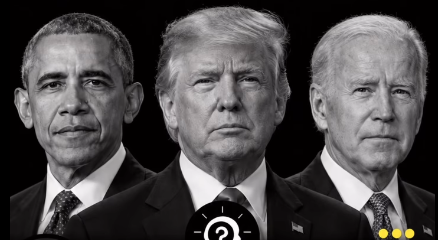
There are many ways to judge a president.
Some Americans judge presidents by the strength of the economy. Others focus on national security, foreign policy, immigration, healthcare, education, or the condition of the country when a president leaves office.
But there is another quality that may be even more important than all of these things.
HONESTY.
A president can have excellent communication skills, make popular promises, deliver impressive speeches, and attract millions of supporters. But what does any of that mean if the public cannot trust what the president says?
The presidency is one of the most powerful positions in the world. The person holding that office has enormous influence over national decisions, government institutions, international relationships, and the future of millions of Americans.
With that power comes a responsibility that should never be taken lightly.
Americans deserve a president who tells the truth, accepts responsibility, explains important decisions, and does not deliberately hide information that the public has a legitimate right to know.
That brings us to an interesting question.
Who do you believe was the most transparent and honest U.S. president: Abraham Lincoln, Barack Obama, or Donald Trump?
This question may appear simple, but the answer is far from easy.
Each of these three presidents served during a very different period in American history.
Abraham Lincoln led the country through the Civil War, one of the most dangerous moments in the nation’s existence.
Barack Obama entered office during a major financial crisis and became the first African American president.
Donald Trump entered American politics as a businessman and television personality before becoming one of the most controversial and influential political figures of modern times.
Their personalities, leadership styles, communication strategies, and relationships with the American public were very different.
Some Americans may choose Lincoln because they admire his leadership during the Civil War and his commitment to preserving the Union.
Others may choose Obama because they remember his calm communication style, his promises of transparency, and his approach to public leadership.
Still others may choose Trump because they believe his direct communication style and willingness to challenge traditional political institutions make him more transparent than other politicians.
But what does honesty actually mean when someone becomes president?
Is it about speaking directly to the public?
Is it about keeping promises?
Is it about admitting mistakes?
Is it about allowing independent investigations?
Or is it about making difficult decisions without deliberately misleading the American people?
These are the questions worth exploring before choosing an answer.
This discussion is not about declaring one president perfect or automatically labeling another dishonest.
No president has a flawless historical record.
Instead, it is about examining their public records, understanding the controversies surrounding their administrations, and considering what standards Americans should use when evaluating presidential honesty.
Let’s take a closer look.
1. ABRAHAM LINCOLN: THE PRESIDENT WHO LED AMERICA THROUGH ITS GREATEST NATIONAL CRISIS
Abraham Lincoln served as the 16th president of the United States from 1861 until his assassination in April 1865.
His presidency took place during one of the most difficult periods in American history.
When Lincoln entered the White House, the country was already moving toward a major conflict over slavery, political power, and the future of the Union.
Several Southern states had begun seceding from the United States.
The country was becoming increasingly divided, and the possibility of a peaceful solution was disappearing.
Lincoln inherited a national crisis that threatened the survival of the American republic.
His leadership would eventually be tested by a devastating civil war that cost hundreds of thousands of lives.
Today, Lincoln is widely remembered as one of the most consequential presidents in American history.
Many Americans associate his name with courage, perseverance, national unity, and the fight against slavery.
But when evaluating his honesty and transparency, it is important to look beyond his historical reputation.
A president should be examined through both his achievements and the difficult decisions he made.
LINCOLN’S COMMITMENT TO PRESERVING THE UNION
One of Lincoln’s most important responsibilities was preserving the United States.
At the beginning of his presidency, he repeatedly communicated that his administration intended to preserve the Union.
He understood that the country was facing an existential crisis.
The United States had been established through a constitutional system, but the secession crisis threatened to destroy that system.
Lincoln believed that the Union was permanent and that individual states did not have the constitutional right to leave whenever they disagreed with the federal government.
His position became the foundation of his administration’s response to secession.
For many Americans, Lincoln’s determination demonstrated a powerful commitment to his responsibilities.
He did not abandon the presidency when the country became divided.
He did not simply accept the destruction of the national government as an unavoidable outcome.
Instead, he continued working to preserve the country, even when the political and military circumstances became extremely difficult.
However, the decisions made during the Civil War also raise complicated questions about presidential authority.
Lincoln’s administration had to make decisions under extraordinary conditions.
Some decisions were popular.
Others were strongly criticized.
And some remain subjects of historical debate.
Understanding these circumstances is essential when evaluating his leadership.
WAS LINCOLN ALWAYS COMPLETELY TRANSPARENT?
Lincoln is often remembered for his powerful speeches and ability to communicate complicated political ideas in relatively direct language.
His Gettysburg Address and second inaugural address remain among the most influential speeches in American history.
He was able to explain the national struggle in terms of constitutional principles, human freedom, sacrifice, and the future of the country.
But being an effective communicator is not exactly the same thing as being completely transparent.
Presidents sometimes withhold information because of military necessity, diplomatic negotiations, national security concerns, or political strategy.
Lincoln’s administration operated during wartime, when information could directly affect military operations and the safety of soldiers.
It would therefore be historically inaccurate to expect the same level of public disclosure from a Civil War president that Americans expect from a modern president.
One particularly important controversy involved Lincoln’s suspension of habeas corpus in certain circumstances during the Civil War.
Habeas corpus is a legal protection that helps prevent people from being detained unlawfully.
Lincoln believed extraordinary measures were necessary to protect the Union during the emergency.
However, his actions raised serious constitutional questions.
Critics argued that presidential authority had gone too far.
Supporters believed the national emergency justified certain temporary measures.
The controversy demonstrates that even a president remembered for his historic leadership faced serious disagreements about constitutional limits and government power.
This matters because honesty and transparency should not be evaluated only by whether a president is admired.
A president can have an extraordinary historical legacy while still making decisions that deserve scrutiny.
Lincoln’s willingness to explain the broader purpose of his policies was an important part of his leadership.
But his presidency also reminds Americans that public accountability must remain important, even during national emergencies.
THE EMANCIPATION PROCLAMATION AND LINCOLN’S EVOLVING POSITION ON SLAVERY
Another defining moment of Lincoln’s presidency was the Emancipation Proclamation.
Issued on January 1, 1863, it declared freedom for enslaved people in areas then in rebellion against the United States, with important limitations.
It did not immediately abolish slavery everywhere in the country.
Nevertheless, it fundamentally changed the character of the Civil War.
The conflict became even more directly connected to the destruction of slavery.
Lincoln’s position on slavery developed over time.
He had long opposed the expansion of slavery, but his political approach and public statements reflected the difficult political circumstances of his era.
During his 1860 campaign, his central position was to prevent slavery from spreading into new territories.
He initially focused heavily on preserving the Union.
As the war progressed, his administration increasingly connected the survival of the Union with emancipation.
Some Americans interpret this development as evidence of Lincoln’s political flexibility and growing commitment to freedom.
Others examine the differences between his earlier positions and later actions.
Historical honesty requires recognizing both the political realities of the time and the importance of his eventual actions.
Lincoln’s decision to issue the Emancipation Proclamation was not simply a public relations announcement.
It was a major political and military decision with lasting consequences.
He also supported efforts to pass the Thirteenth Amendment, which abolished slavery throughout the United States.
The amendment was ratified after his death.
For many Americans, these achievements make Lincoln an extraordinary example of presidential leadership.
They believe his willingness to move the country toward emancipation demonstrated moral courage and a commitment to a larger national purpose.
But the question remains:
Does a president’s historical contribution to freedom and national unity automatically make that president the most honest?
Not necessarily.
Historical achievement and personal honesty are related qualities, but they are not identical.
A president should be evaluated based on evidence of character, conduct, communication, and responsibility.
LINCOLN’S ABILITY TO COMMUNICATE WITH ORDINARY AMERICANS
One reason Lincoln remains admired is his communication style.
He frequently used simple language, stories, humor, and memorable expressions to explain difficult political issues.
He did not always communicate like a traditional political leader.
His speeches could be serious without being unnecessarily complicated.
His language often connected constitutional principles to everyday experiences.
This ability helped him communicate with people who had very different backgrounds and political opinions.
He also understood the importance of explaining the purpose of government decisions.
During the Civil War, Americans needed to understand why the country was fighting and what the government was trying to preserve.
Lincoln’s public speeches helped define the national purpose of the conflict.
His words also reflected an understanding that a president must speak to the entire nation, not simply to the people who voted for him.
That is an important lesson for modern political leaders.
A president represents the country even when the country disagrees about political issues.
However, historical admiration should not prevent critical examination.
Lincoln also used political negotiation, strategic communication, and wartime secrecy.
These were part of governing during an extraordinary national crisis.
The important question is not whether every presidential decision was publicly disclosed.
It is whether the president acted responsibly within the circumstances and whether the public was given an honest explanation when disclosure was appropriate.
WHY MANY AMERICANS STILL TRUST LINCOLN’S HISTORICAL LEGACY
More than a century and a half after his death, Lincoln remains an important symbol of American leadership.
His presidency is associated with the preservation of the Union, the end of slavery, and the survival of the constitutional system.
His speeches continue to be studied.
His decisions continue to be debated.
And his leadership remains a subject of historical research.
Many Americans believe Lincoln demonstrated the qualities they want in a president:
Courage during difficult times.
A willingness to confront national problems.
Respect for the constitutional system.
A commitment to a broader national purpose.
And the ability to communicate with people who strongly disagreed with him.
For these reasons, Lincoln is a serious candidate in any discussion about presidential integrity.
But an important question remains.
Are Americans judging Lincoln based on documented evidence about his conduct, or are they allowing his enormous historical achievements to influence their perception of his honesty?
That distinction is worth considering.
A president can be historically great without being perfect.
And a fair discussion should allow people to recognize both achievements and shortcomings.
2. BARACK OBAMA: THE PRESIDENT WHO PROMISED A NEW ERA OF TRANSPARENCY
Barack Obama served as the 44th president of the United States from January 2009 until January 2017.
His election represented a historic moment in American political history.
He became the first African American president, and his campaign attracted enormous attention across the country.
Millions of Americans viewed his election as a symbol of change.
His message focused on hope, unity, reform, and the possibility of building a different kind of political future.
Obama also placed considerable emphasis on transparency and accountability during his campaign.
He promised a government that would be more open and responsive to the American people.
For supporters, his communication style represented a departure from the political conflicts that had dominated previous years.
He often appeared calm, measured, and comfortable explaining complicated policy decisions.
However, a president’s communication style is only one part of transparency.
To understand Obama’s record, Americans should also examine how his administration handled information, government surveillance, national security, and criticism.
THE PROMISE OF A MORE OPEN GOVERNMENT
When Obama entered office in January 2009, his administration emphasized the importance of openness.
One early action involved a memorandum on transparency and open government.
The administration described transparency, participation, and collaboration as important principles for federal agencies.
The general idea was that government should operate in a way that allows citizens to understand its activities and participate in public decision-making.
This was an important promise.
In a democracy, citizens should not have to guess what their government is doing.
They should have access to information about public spending, important policies, and the decisions made by elected officials.
Transparency can help people identify mistakes, examine possible misconduct, and hold public officials accountable.
Obama’s supporters viewed these commitments as evidence that his administration wanted to improve the relationship between government and citizens.
But promises are only meaningful when they are reflected in practice.
And Obama’s administration faced criticism on precisely this issue.
THE NATIONAL SECURITY AGENCY SURVEILLANCE CONTROVERSY
One of the most significant transparency controversies during Obama’s presidency involved the National Security Agency.
In 2013, former intelligence contractor Edward Snowden disclosed classified information about government surveillance programs.
The revelations created an international debate about privacy, national security, and the power of intelligence agencies.
Americans learned more about the scale of certain surveillance activities than many had previously understood.
The disclosures raised difficult questions.
How much information should the government be allowed to collect?
Should intelligence agencies be able to monitor communications involving ordinary citizens?
How much oversight should exist over classified programs?
And how can citizens evaluate government activities when important information is kept secret?
Obama’s administration defended the importance of intelligence gathering.
Officials argued that the programs were intended to protect national security and operated within legal frameworks.
However, critics argued that the public deserved greater transparency and stronger safeguards.
The controversy created a significant challenge for an administration that had promised a more open government.
For some Americans, the surveillance disclosures weakened confidence in Obama’s transparency commitments.
For others, the intelligence programs demonstrated the difficult balance presidents must maintain between protecting national security and respecting individual privacy.
The issue remains important because it highlights a fundamental challenge of modern government.
A president cannot publicly disclose every intelligence operation without potentially damaging national security.
But the existence of national security concerns does not mean intelligence agencies should operate without meaningful oversight.
There must be a balance between secrecy and accountability.
That balance is one of the most difficult responsibilities of any modern president.
THE PROMISE OF TRANSPARENCY AND THE TREATMENT OF GOVERNMENT WHISTLEBLOWERS
Another controversy involved the Obama administration’s approach to classified information and government whistleblowers.
The administration pursued several prosecutions under the Espionage Act involving individuals who disclosed classified information to the media.
Critics argued that these prosecutions created a chilling effect on investigative journalism and discouraged government employees from exposing potential wrongdoing.
They believed that people who reveal important information about government conduct should have meaningful protections when acting in the public interest.
Supporters of the administration argued that protecting classified information was essential for national security.
They maintained that unauthorized disclosures could put intelligence operations, military personnel, and international relationships at risk.
This debate raises a difficult question.
How should a president balance the public’s right to know with the government’s responsibility to protect sensitive information?
There is no simple answer.
Some disclosures can reveal important government misconduct.
Others can expose sensitive information that could endanger people.
A responsible government needs procedures that protect legitimate whistleblowing while also protecting genuinely sensitive national security information.
The Obama administration’s record on this subject remains part of the broader debate about transparency.
It is important to distinguish between the administration’s legal actions and the broader ethical arguments about whether those actions were appropriate.
The controversy demonstrates that a president can promise transparency while still making decisions that create serious disagreements about openness.
OBAMA’S COMMUNICATION STYLE AND PUBLIC TRUST
One reason many Americans remember Obama positively is his communication style.
He often delivered carefully prepared speeches and explained policies in a structured and measured way.
His supporters believed he generally appeared calm and thoughtful, particularly during moments of national difficulty.
His critics sometimes argued that his speeches were too polished or that his administration was not always as transparent as its public messaging suggested.
This illustrates an important difference between communication and transparency.
A president may speak clearly without providing all the information citizens need.
A president may appear confident while avoiding difficult questions.
And a president may deliver a powerful speech while still making decisions that deserve independent examination.
Transparency is not simply about sounding honest.
It involves providing accurate information, acknowledging uncertainty, explaining decisions, and allowing appropriate oversight.
A leader’s communication style can influence public confidence, but it cannot replace the need for evidence.
Americans should therefore examine both what a president says and what the administration actually does.
THE IRS CONTROVERSY AND QUESTIONS ABOUT GOVERNMENT IMPARTIALITY
Another major controversy during Obama’s presidency involved the Internal Revenue Service.
In 2013, the IRS acknowledged that certain conservative organizations seeking tax-exempt status had received additional scrutiny based on their names and political characteristics.
The controversy triggered investigations and intense political criticism.
Americans raised questions about whether government agencies were treating political organizations fairly.
The issue was particularly sensitive because federal agencies are expected to operate without political favoritism.
A government institution should not punish or unfairly target individuals or organizations because of their political opinions.
Investigations examined the conduct of IRS employees and the agency’s internal procedures.
The controversy damaged public confidence and created questions about how the administration would respond.
However, it is important to distinguish between misconduct by agency employees and proof that the president personally directed the conduct.
Investigations did not establish that Obama personally ordered the targeting activities.
This distinction matters because presidential accountability requires examining the evidence connecting a president to a particular action.
At the same time, presidents have a responsibility to oversee the executive branch.
When serious problems emerge inside federal agencies, the public has a legitimate interest in how the administration responds.
The question is not whether every agency employee’s mistake should automatically be blamed on the president.
It is whether the administration takes responsibility, investigates the problem, corrects the failure, and communicates honestly with the public.
That is an important standard for evaluating every president.
DRONE OPERATIONS AND THE QUESTION OF TRANSPARENCY
Obama’s presidency also involved difficult debates about the use of drones in counterterrorism operations.
The United States used targeted operations against individuals considered threats to national security.
These operations raised serious questions about civilian casualties, legal authority, accountability, and the limits of presidential power.
Supporters argued that targeted operations could help protect Americans from terrorist threats.
Critics questioned whether the administration provided enough public information about the decisions involved.
They also raised concerns about the possibility of civilian deaths and the limited transparency surrounding certain operations.
This debate is particularly important because national security decisions can have consequences far beyond the United States.
A president must consider the safety of American citizens, the lives of civilians overseas, international law, and the long-term effects of military decisions.
The public cannot necessarily receive every operational detail.
However, citizens should be able to understand the general legal and ethical framework under which military power is exercised.
Presidential transparency requires meaningful explanations and appropriate oversight, even when certain details must remain classified.
This is another reason Obama’s record cannot be evaluated only by the quality of his speeches.
The public should consider the decisions made by his administration and whether those decisions were explained and reviewed appropriately.
WAS OBAMA MORE TRANSPARENT THAN OTHER PRESIDENTS?
This question is difficult because transparency can be measured in several different ways.
One person may focus on how frequently a president speaks publicly.
Another may focus on access to government documents.
Someone else may prioritize press freedom, independent oversight, classified information, or the administration’s willingness to acknowledge mistakes.
Obama entered office promising greater openness.
His administration took steps to promote open government and public access to information.
However, his record also involved controversies over surveillance, classified information, whistleblower prosecutions, and government accountability.
Supporters may argue that the administration made meaningful progress despite the challenges of national security and a complicated political environment.
Critics may argue that the administration did not consistently meet its own transparency promises.
Both perspectives deserve examination.
The important thing is not to decide based on political popularity.
It is to compare promises with actions.
A president should be evaluated not only by what he says about transparency but also by whether citizens, journalists, oversight institutions, and Congress can meaningfully examine the government’s decisions.
WHY OBAMA REMAINS A STRONG CANDIDATE IN THIS DISCUSSION
Obama’s supporters often point to his communication style, his emphasis on public engagement, and his commitment to government reform.
They remember a president who frequently explained his policies and tried to communicate complicated issues to ordinary Americans.
They also point to his historic role in American politics and the way his election changed the country’s political landscape.
Critics, however, may emphasize the gap between his transparency promises and the controversies involving surveillance and classified information.
They may argue that a president should be judged more by government practices than by public speeches.
These different perspectives make Obama an interesting choice in this quiz.
His presidency demonstrates that transparency is not a simple question of whether a president appears calm, intelligent, or convincing.
It requires examining how power is used and how much meaningful information the public receives.
Ultimately, Americans must decide what matters most to them.
Is it a president’s communication style?
Is it the openness of the administration?
Is it the willingness to accept criticism?
Or is it the practical ability of citizens to understand and scrutinize government decisions?
These questions will become even more important when examining the third president in this discussion.
PART 1 CONCLUSION: TWO VERY DIFFERENT PRESIDENTS, TWO DIFFERENT HISTORICAL PERIODS
Abraham Lincoln and Barack Obama served during very different periods in American history.
Lincoln faced a Civil War that threatened the survival of the United States.
Obama faced modern challenges involving financial recovery, national security, government surveillance, and public demands for greater transparency.
Lincoln is remembered for preserving the Union and helping bring slavery to an end.
Obama is remembered for his historic election and his administration’s efforts to promote a more open government, alongside controversies that challenged those commitments.
Both presidents have supporters who believe their leadership demonstrated important qualities.
Both also have critics who question particular decisions and aspects of their records.
And that is exactly why this discussion deserves careful consideration.
A president should not automatically be considered honest because millions of people admire him.
Nor should a president automatically be considered dishonest because political opponents criticize him.
Honesty must be evaluated through actions, evidence, communication, and accountability.
The question is not simply who delivered the most inspiring speeches.
It is who demonstrated the strongest commitment to telling the truth, respecting the public, and accepting responsibility while holding the highest office in the country.
But we still have one important president to examine.
DONALD TRUMP.
His communication style, relationship with the media, business background, political controversies, and approach to public accountability have generated enormous debate.
Some Americans believe his direct communication makes him more transparent than traditional politicians.
Others believe his public statements and controversies raise serious questions about honesty and trust.
To understand why people have such different opinions, we need to examine his record carefully.
PART 1 ENDS HERE.
🇺🇸 CONTINUE TO PART 2 — DONALD TRUMP, THE FINAL COMPARISON, AND THE QUESTION OF WHO REALLY DESERVES TO BE CALLED THE MOST TRANSPARENT AND HONEST PRESIDENT.
PART 2 — THE FINAL COMPARISON THAT EVERY AMERICAN SHOULD CONSIDER
3. DONALD TRUMP: THE PRESIDENT WHO CHANGED THE WAY AMERICA COMMUNICATES ABOUT POLITICS
Donald Trump is one of the most recognizable and controversial political figures in modern American history.
Before entering politics, he was widely known as a businessman, real estate developer, and television personality.
His communication style was already familiar to millions of Americans before he entered the presidential race.
However, his political career changed the way many people thought about presidential communication.
Trump presented himself as an outsider who was willing to challenge traditional political institutions.
He frequently criticized established politicians, questioned the mainstream media, and argued that Washington needed a different kind of leadership.
For his supporters, this approach represented something different from traditional presidential politics.
They believed he was willing to speak directly to Americans without relying on conventional political language.
They appreciated his willingness to challenge powerful institutions and discuss subjects that other politicians sometimes avoided.
For his critics, however, Trump’s communication style raised serious concerns about accuracy, responsibility, and the quality of public information.
This difference in perception is one of the main reasons Trump generates such strong reactions when Americans discuss presidential honesty.
Some people believe he is more transparent because he communicates frequently and directly.
Others believe transparency should be measured by whether public statements are accurate, whether important information is disclosed, and whether a president accepts responsibility when statements are incorrect.
These are two very different standards.
To evaluate Trump’s record fairly, it is important to examine both his communication style and the controversies surrounding his presidency.
TRUMP’S DIRECT COMMUNICATION STYLE: DOES SPEAKING FREELY MEAN BEING TRANSPARENT?
One of Trump’s most distinctive political characteristics is his direct communication style.
Throughout his political career, he frequently used social media, television interviews, rallies, and public appearances to communicate with Americans.
He often expressed his opinions in strong language.
Unlike many traditional politicians, he regularly addressed political controversies directly and publicly.
His supporters appreciated this approach.
They argued that Americans did not need complicated political speeches to understand his position.
They believed Trump communicated in a way that made people feel he was speaking directly to them.
His supporters also argued that his willingness to criticize established institutions made him appear less controlled by traditional political expectations.
For many of them, this was an important part of his appeal.
However, direct communication and transparency are not necessarily the same thing.
A person can speak frequently without providing accurate information.
A person can express strong opinions while leaving out important details.
And a president can communicate openly about personal beliefs while still facing legitimate questions about official decisions.
This distinction is important.
When evaluating presidential honesty, Americans should consider not only how often a president speaks but also whether the statements are accurate and supported by evidence.
A president’s words can influence public opinion, financial markets, international relationships, and confidence in government institutions.
That makes accuracy especially important.
Trump’s communication style therefore raises an interesting question:
Should Americans consider a president more transparent simply because he communicates more frequently and directly?
Or should they focus primarily on the accuracy of what he communicates?
That is a question every voter should consider.
THE RELATIONSHIP BETWEEN TRUMP AND THE MEDIA
Another major part of Trump’s presidency involved his relationship with the American media.
Throughout his political career, Trump frequently criticized major news organizations.
He accused certain media outlets of presenting unfair coverage and repeatedly challenged journalists over their reporting.
His supporters often agreed with his criticism.
They believed traditional media organizations sometimes demonstrated political bias and failed to provide balanced coverage.
They appreciated that Trump openly challenged journalists and encouraged people to question the information presented by major news organizations.
His critics, however, argued that his attacks on the media undermined public confidence in independent journalism.
They believed that repeatedly labeling unfavorable reporting as false or politically motivated could make it more difficult for Americans to distinguish reliable information from misinformation.
This debate is important because a free press plays a central role in American democracy.
Journalists investigate government decisions, report on political controversies, examine public spending, and ask questions that elected officials may prefer to avoid.
A president does not have to agree with every journalist.
Journalists can make mistakes, demonstrate bias, and publish inaccurate reporting.
But a healthy democracy also needs independent media organizations that can investigate the government without fear of political retaliation.
The real question is whether a president encourages citizens to examine information critically or simply encourages them to reject information that challenges their political beliefs.
Americans should question the media.
But they should also question politicians.
Neither a newspaper headline nor a presidential statement should automatically be accepted without considering the evidence.
That is one of the most important lessons in the discussion about transparency.
THE 2020 PRESIDENTIAL ELECTION AND QUESTIONS ABOUT HONEST COMMUNICATION
One of the most significant controversies surrounding Trump involved the 2020 presidential election.
After losing the election to Joe Biden, Trump repeatedly challenged the result and made claims about widespread election fraud.
His legal team and political allies pursued numerous challenges.
Courts rejected many of the claims or found that the available evidence did not establish grounds to change the election outcome.
Election officials from both parties also defended the integrity of the overall result.
The controversy became one of the most consequential political events in recent American history.
It raised serious questions about presidential responsibility, public trust, and the importance of accurate information.
An election is one of the most important processes in a democracy.
Citizens must be able to trust that votes are counted according to the law and that political leaders respect legitimate election outcomes.
A president has an especially important responsibility because millions of people may rely on the president’s statements when deciding whether to trust democratic institutions.
Supporters of Trump continued to express concerns about the election and the way certain procedures were handled.
Critics argued that repeatedly presenting unsupported claims of widespread fraud as established facts damaged public confidence in the democratic process.
The events surrounding January 6, 2021, made the controversy even more serious.
The attack on the U.S. Capitol disrupted the congressional proceeding to certify the electoral votes.
Trump’s conduct and statements surrounding the events became the subject of congressional investigations and his second impeachment.
He denied wrongdoing and was acquitted by the Senate.
This episode remains central to debates about presidential leadership and responsibility.
For people evaluating Trump’s honesty, it is an important part of the historical record.
However, Americans should examine the specific statements, available evidence, official findings, and legal outcomes rather than relying entirely on political interpretations.
The broader lesson is that presidential communication carries enormous responsibility.
When a president discusses elections, the accuracy of those statements matters because public confidence in democratic institutions is at stake.
BUSINESS INTERESTS AND QUESTIONS ABOUT CONFLICTS OF INTEREST
Another important issue involving Trump concerns his business background.
Before becoming president, he built a public identity around business, real estate, and commercial success.
That background was a central part of his political appeal.
Supporters believed his business experience made him different from career politicians.
They argued that he understood negotiations, employment, investment, and the private sector.
However, entering the presidency while maintaining connections to a business empire created questions about potential conflicts of interest.
Critics raised concerns about whether presidential responsibilities could overlap with private financial interests.
They questioned whether government decisions, foreign relationships, or political access could create benefits for businesses associated with Trump.
These concerns were not simply about whether a president had been successful in business.
They were about whether a person holding public office could separate private financial interests from official responsibilities.
This is an important ethical issue for any president.
Presidents should avoid situations in which personal financial interests could influence official decisions.
They should also provide sufficient transparency to allow the public to understand how potential conflicts are being handled.
Trump’s supporters argued that his business experience was part of what made him qualified to lead the country.
Critics argued that the overlap between private business interests and presidential responsibilities created unnecessary ethical concerns.
The broader lesson is that business success and presidential transparency are separate questions.
A successful businessperson is not automatically a transparent president.
Likewise, having a business background does not automatically establish corruption.
The evidence and the arrangements involved must be examined carefully.
THE TWO IMPEACHMENTS AND PRESIDENTIAL ACCOUNTABILITY
Trump’s two impeachments during his first presidency became major moments in modern American political history.
The first impeachment occurred in December 2019.
The House of Representatives approved articles of impeachment involving abuse of power and obstruction of Congress.
The controversy centered on Trump’s dealings with Ukraine and questions about whether he had improperly pressured the country to investigate political matters involving Joe Biden and his son.
Trump denied wrongdoing.
The Senate acquitted him in February 2020.
His second impeachment occurred in January 2021, following the attack on the U.S. Capitol.
The House charged him with incitement of insurrection.
The Senate again acquitted him.
These events created a national debate about the responsibilities of a president.
Some Americans believed the impeachments demonstrated that Trump had crossed important constitutional and ethical boundaries.
Others believed the proceedings were politically motivated and did not justify removing him from office.
Regardless of political opinion, the two impeachments are significant when evaluating his relationship with presidential accountability.
Impeachment is not the same as a criminal conviction.
It is a constitutional process through which Congress examines allegations of serious misconduct by federal officials.
However, being impeached twice is an important historical fact that deserves consideration.
It also raises a broader question:
Should a president’s commitment to transparency include a willingness to accept congressional oversight, answer difficult questions, and cooperate with lawful investigations?
That question should apply to every president, regardless of political party.
TRUMP’S CRIMINAL CONVICTION AND THE QUESTION OF HONESTY
Another important part of Trump’s historical record involves his criminal conviction in New York in 2024.
A jury found him guilty on 34 felony counts of falsifying business records in connection with a payment made before the 2016 presidential election.
This made him the first former U.S. president convicted of felony crimes.
In January 2025, he received an unconditional discharge.
This meant that no imprisonment, fine, or probation was imposed.
The case became one of the most widely discussed legal events involving a former American president.
His supporters argued that the prosecution was politically motivated.
His critics argued that the verdict demonstrated the importance of applying the law to powerful individuals.
For a discussion about presidential honesty, this legal history deserves attention.
However, it is important to describe the case accurately and distinguish its specific findings from broader political allegations.
A criminal conviction is different from an accusation.
It is also important not to assume that every controversy involving a president has the same legal meaning.
Americans should consider the actual conduct, the court’s findings, and the legal outcome.
The larger principle is straightforward:
A president’s political popularity should not determine whether the law applies.
No individual should receive automatic immunity from legitimate legal accountability simply because millions of people support them.
At the same time, legal proceedings should follow fair procedures and established standards.
That is how the rule of law should operate.
WHY SOME AMERICANS BELIEVE TRUMP IS MORE TRANSPARENT
Despite the controversies surrounding his presidency, Trump has many supporters who believe he is unusually transparent.
Why?
One reason is his communication style.
He frequently communicates directly with supporters and expresses his opinions without the carefully controlled language traditionally associated with presidential speeches.
Supporters often believe this makes him more authentic.
They may argue that other politicians hide behind prepared statements, professional advisers, and carefully managed public appearances.
They appreciate Trump’s willingness to speak publicly about political disagreements.
Another reason is his criticism of established institutions.
Some supporters believe the federal government, major media organizations, and traditional political leaders have not always been honest with the public.
They see Trump as someone willing to challenge these institutions.
For them, questioning the establishment is an important part of transparency.
However, the question remains whether challenging institutions is enough to establish honesty.
A president can question the media and still make inaccurate statements.
A president can criticize government agencies and still need to provide accurate explanations of his own administration’s decisions.
Transparency must involve more than challenging other people.
It must also involve accepting scrutiny.
That is why evaluating Trump requires looking at both his direct communication style and the accuracy of his public statements.
WHY OTHER AMERICANS QUESTION TRUMP’S HONESTY
Trump’s critics often focus on the number and seriousness of controversies involving his public statements and conduct.
They argue that a president should communicate accurate information, respect independent institutions, and avoid statements that could undermine public confidence without sufficient evidence.
They also point to his legal controversies and impeachments.
For these Americans, transparency is not about speaking frequently or using strong language.
It is about providing reliable information and accepting responsibility.
Some critics believe Trump’s communication style has made political discussions more difficult because supporters and opponents often disagree about which sources of information can be trusted.
Others argue that his willingness to challenge traditional institutions can be positive in some circumstances but harmful when it weakens confidence in legitimate democratic processes.
Supporters strongly disagree with many of these criticisms.
This is precisely why Trump remains such a divisive figure.
A fair discussion must acknowledge the reasons behind different opinions without presenting every political interpretation as an established fact.
Ultimately, voters must decide which qualities they consider most important.
Is direct communication the most important sign of transparency?
Or is accuracy, accountability, and respect for public institutions more important?
That is the central question.
4. COMPARING LINCOLN, OBAMA, AND TRUMP: WHO DESERVES THE MOST TRUST?
Now that we have examined all three presidents, it is time to compare their records more directly.
Each president served during a different historical period.
Each faced different national challenges.
Each developed a different relationship with the American public.
And each has a historical record that deserves examination.
But how should Americans compare them?
One useful approach is to examine several important qualities.
HONESTY IN PUBLIC COMMUNICATION
Honesty in public communication means providing accurate information and avoiding deliberate deception.
It also means being willing to correct mistakes and explain complicated decisions.
Lincoln is remembered for his ability to communicate the purpose of preserving the Union and for his powerful speeches about freedom and national responsibility.
Obama is remembered for his polished communication style and his emphasis on public engagement, although his administration faced significant transparency controversies.
Trump is remembered for his direct communication style and frequent public statements, but the accuracy of many of those statements became a major subject of political and media scrutiny.
These three records are very different.
Some Americans may prioritize Lincoln’s historical leadership and speeches.
Others may appreciate Obama’s calm and structured approach.
Still others may prefer Trump’s directness and willingness to challenge traditional political communication.
But one important distinction should remain clear.
A president should not be judged only by how convincing he sounds.
The accuracy of his statements matters.
TRANSPARENCY IN GOVERNMENT DECISIONS
Transparency also means allowing citizens to understand how government decisions are made.
Lincoln operated during a major war, when military secrecy was often necessary.
Obama promised a more open government but faced controversies involving surveillance and classified information.
Trump frequently communicated directly with the public but also faced controversies involving government oversight, legal proceedings, and presidential accountability.
The historical circumstances were different.
It would be unfair to expect a Civil War president to operate under exactly the same transparency standards as a modern president.
It would also be unfair to ignore modern expectations when evaluating contemporary administrations.
The fairest approach is to consider what information could reasonably be disclosed during each presidency and whether the administration respected appropriate accountability mechanisms.
ACCEPTING RESPONSIBILITY
Another important quality is the willingness to accept responsibility.
Presidents make decisions that affect millions of people.
Sometimes those decisions produce positive outcomes.
Sometimes they create serious problems.
A trustworthy president should be able to explain mistakes, recognize failures, and respond to legitimate criticism.
Lincoln faced enormous pressure during the Civil War and had to make difficult decisions under extraordinary circumstances.
Obama faced criticism over national security and government transparency.
Trump faced major criticism over his statements, political conduct, and legal controversies.
The public can disagree about the severity of these issues.
But the principle remains the same.
Presidential accountability should not depend on political loyalty.
If Americans expect one president to answer difficult questions, they should expect the same from every president.
RESPECT FOR DEMOCRATIC INSTITUTIONS
A president’s relationship with democratic institutions is another important part of public trust.
The Constitution establishes limits on presidential power.
Congress, the courts, elections, and independent journalism all play important roles in protecting democratic accountability.
Lincoln’s presidency tested constitutional authority during the Civil War.
Obama’s presidency involved debates about surveillance, executive power, and government oversight.
Trump’s presidency involved major controversies about elections, impeachment, congressional oversight, and the relationship between the executive branch and other institutions.
These historical circumstances were not identical.
However, they all demonstrate why the relationship between presidential power and constitutional limits matters.
A president may disagree with Congress.
A president may criticize journalists.
A president may challenge court decisions through lawful procedures.
But democratic institutions must remain capable of performing their constitutional responsibilities.
No president should be considered above the law.
HISTORICAL ACHIEVEMENTS VERSUS PERSONAL HONESTY
There is another issue that deserves attention.
Americans sometimes confuse historical achievements with personal honesty.
Lincoln helped preserve the Union and played a central role in the abolition of slavery.
Obama became the first African American president and led the country through the aftermath of the financial crisis.
Trump changed the political landscape and pursued policies that attracted strong support from millions of Americans.
These are important historical developments.
But achievements do not automatically establish honesty.
A president can accomplish important things and still make questionable decisions.
A president can be admired by millions and still deserve criticism.
A president can face serious controversies and still have supporters who believe his overall leadership was valuable.
These ideas are not mutually exclusive.
A fair historical judgment requires considering the full record.
5. WHAT DOES HONESTY REALLY MEAN IN THE WHITE HOUSE?
Before choosing the final answer, Americans should consider what they expect from a president.
Is honesty simply telling people what they want to hear?
Is transparency about making frequent public appearances?
Is integrity about following political promises?
Or does it require something deeper?
A trustworthy president should demonstrate several qualities.
1. Telling the truth even when the truth is unpopular.
A president should not deliberately mislead citizens simply because an accurate explanation could create political difficulties.
2. Admitting mistakes.
No president can make every decision perfectly.
A leader’s response to mistakes can reveal a great deal about their character.
3. Respecting independent investigations.
Investigations should be allowed to examine credible allegations without improper political interference.
4. Protecting public institutions.
Government institutions should serve the public rather than a president’s personal or political interests.
5. Explaining important decisions.
Citizens should receive meaningful explanations of policies and decisions whenever information can reasonably be disclosed.
6. Accepting legitimate criticism.
A president should understand that questioning political leaders is part of democracy.
7. Applying the same standards to everyone.
Honesty and accountability should not change depending on whether a politician belongs to the Republican Party or the Democratic Party.
These standards may sound simple.
But applying them consistently can be difficult.
People naturally have political preferences.
They may admire certain presidents and strongly dislike others.
However, the strongest political judgment is one that can recognize evidence even when it challenges personal beliefs.
That is the kind of discussion America needs.
6. WHY PUBLIC TRUST IS SO IMPORTANT FOR THE FUTURE OF AMERICA
Public trust is one of the most important foundations of a democratic country.
Citizens do not have to agree with every government decision.
They do not have to support every president.
They do not have to share the same political beliefs.
But they should be able to expect that government officials communicate honestly and operate within the law.
When public trust becomes weak, the consequences can be serious.
People may begin questioning every official announcement.
They may believe investigations are politically motivated.
They may stop trusting institutions that are essential to democracy.
They may even lose confidence in the country’s ability to resolve political disagreements peacefully.
This is why presidential honesty matters so much.
A president’s statements can influence how millions of people understand important events.
The president also represents the United States to the rest of the world.
International leaders pay attention to presidential statements.
Businesses and investors respond to major policy announcements.
American citizens make decisions based on information provided by their government.
That creates an enormous responsibility.
Presidents should understand that their words matter.
Their actions matter.
And their willingness to accept responsibility matters.
A strong leader should not be afraid of legitimate questions.
A strong leader should not expect automatic agreement.
And a strong leader should understand that public trust must be earned.
The American people should never have to choose between political loyalty and their right to know the truth.
7. SHOULD AMERICANS JUDGE PRESIDENTS BY THEIR WORDS OR THEIR ACTIONS?
This may be the most important question in the entire discussion.
Presidents make promises during campaigns.
They deliver speeches after elections.
They explain policies during press conferences.
They communicate with citizens through interviews, public statements, and social media.
But words alone cannot tell the whole story.
A politician can promise transparency and still make decisions that deserve scrutiny.
A politician can speak directly and still provide inaccurate information.
A politician can sound convincing without providing sufficient evidence.
That is why Americans should compare public statements with actual actions.
If a president promises government transparency, citizens should examine whether the administration provides meaningful access to information.
If a president promises honesty, citizens should examine whether important public statements are accurate.
If a president promises accountability, citizens should examine how the administration responds to investigations and oversight.
This approach is more useful than simply deciding which president sounds the most convincing.
It also makes political discussions more meaningful.
Instead of arguing about personalities alone, Americans can discuss specific decisions, documented actions, and historical evidence.
That is how a better political conversation begins.
8. THE MOST IMPORTANT LESSON: NO PRESIDENT IS PERFECT
There is something every American should remember when discussing presidential leadership.
No president has a perfect record.
Every administration faces challenges.
Every president makes difficult decisions.
Some decisions produce positive results.
Others create controversy.
Some decisions are later viewed differently as new evidence becomes available.
That is why history should be examined carefully.
It is easy to judge presidents using today’s political opinions.
It is more difficult to understand the circumstances they faced while making decisions.
Lincoln’s presidency cannot be understood without considering the Civil War.
Obama’s presidency cannot be understood without considering the financial crisis and modern national security challenges.
Trump’s presidency cannot be understood without considering the political divisions and institutional conflicts that shaped his time in office.
Context matters.
But context should not become an excuse for avoiding accountability.
Understanding why a president made a decision is not the same as agreeing with that decision.
Recognizing a president’s achievements does not mean ignoring mistakes.
And criticizing a president does not mean rejecting everything that administration accomplished.
A mature democracy should be able to recognize both sides.
That is why Americans should approach this question with an open mind.
The goal should not be to defend one politician at all costs.
The goal should be to understand which qualities make a president worthy of public trust.
🇺🇸 9. NOW IT IS TIME FOR AMERICA TO MAKE ITS CHOICE!
We have examined three presidents from three different periods of American history.
We have discussed their communication styles, historical achievements, political controversies, and approaches to presidential leadership.
Now we want to hear from you.
WHO DO YOU BELIEVE WAS THE MOST TRANSPARENT AND HONEST U.S. PRESIDENT?
🅰️ A. ABRAHAM LINCOLN
🅱️ B. BARACK OBAMA
🅲 C. DONALD TRUMP
There is no universally accepted objective ranking that proves one of these three presidents was the most honest.
This is a question about historical judgment and personal evaluation.
We want to know which president you believe demonstrated the strongest commitment to honesty, transparency, and public accountability.
Don’t simply choose the president you like the most.
Think about the evidence.
Think about the decisions.
Think about the way each president communicated with the American people.
And think about how each administration responded to criticism and difficult questions.
💬 FIVE QUESTIONS FOR EVERYONE JOINING THE DISCUSSION
QUESTION 1:
Do you believe Abraham Lincoln deserves the title because of his leadership during the Civil War and his role in ending slavery?
QUESTION 2:
Do you believe Barack Obama demonstrated greater transparency through his communication style and promises of open government?
QUESTION 3:
Do you believe Donald Trump’s direct communication style makes him more transparent than traditional politicians?
QUESTION 4:
Should a president be judged more by what he says publicly or by the decisions he makes privately?
QUESTION 5:
Do you believe Americans apply the same standards of honesty and accountability to Republican and Democratic presidents?
We want to hear different perspectives.
You do not have to agree with everyone.
You do not have to support the same political party.
But disagreements should be based on evidence and expressed respectfully.
A meaningful discussion is not about attacking people who have different opinions.
It is about understanding why they believe what they believe.
10. ONE FINAL MESSAGE TO THE AMERICAN PEOPLE
The presidency is not simply a political position.
It is a public responsibility.
The person sitting in the Oval Office has a duty to serve the country, respect the Constitution, and remember that the power of the office comes from the American people.
A president may have millions of supporters.
A president may win an overwhelming election victory.
A president may deliver historic speeches and achieve important political goals.
But none of those things removes the responsibility to be honest.
The American people deserve leaders who understand that transparency is not a weakness.
Admitting mistakes is not weakness.
Answering difficult questions is not weakness.
Allowing legitimate investigations is not weakness.
Respecting independent institutions is not weakness.
These are important qualities of responsible leadership.
A country becomes stronger when its citizens can trust that public officials are acting in the national interest.
It becomes stronger when government decisions can be examined.
It becomes stronger when leaders accept responsibility for their actions.
And it becomes stronger when people can disagree politically without abandoning their commitment to truth.
The United States has experienced many difficult periods throughout its history.
It has faced war, economic crises, social divisions, political scandals, and enormous changes in the world.
Through those challenges, the American political system has continued to depend on citizens who are willing to participate, ask questions, and hold their leaders accountable.
That responsibility does not belong only to journalists, politicians, historians, or government investigators.
It belongs to ordinary Americans too.
Every citizen has a role in protecting the principles of democracy.
And one of the most important ways to do that is to demand honesty from the people who hold public office.
Not just from presidents we dislike.
Not just from politicians who belong to the opposing party.
But from everyone.
Because the standards of honesty should never change based on political popularity.
THE PRESIDENT SHOULD SERVE THE PEOPLE. THE PEOPLE SHOULD NEVER HAVE TO SERVE THE PRESIDENT.
That is a principle worth remembering.
And it is a principle that should guide every discussion about presidential integrity.
🇺🇸 FINAL VOTE: WHO DESERVES YOUR TRUST?
Let’s bring the discussion back to the original question.
WHO DO YOU BELIEVE WAS THE MOST TRANSPARENT AND HONEST U.S. PRESIDENT EVER?
🅰️ A. ABRAHAM LINCOLN
🅱️ B. BARACK OBAMA
🅲 C. DONALD TRUMP
👇 COMMENT A, B, OR C BELOW!
💬 Explain why you chose that president.
🇺🇸 Share this post with your friends and family. Let’s see how Americans from different generations and political backgrounds answer this question.
Remember, the goal is not to silence different opinions.
The goal is to have a meaningful conversation about honesty, integrity, leadership, and accountability.
BECAUSE AMERICA DESERVES HONEST LEADERSHIP — AND EVERY PRESIDENT SHOULD BE HELD ACCOUNTABLE. 🇺🇸
END OF PART 2 — FINAL PART.